
Equipment
Ingredients
Main Components
- 1 chicken, cut into pieces
- 5 g salt
- 2 g black pepper, freshly ground
- 120 ml vegetable oil
- 950 ml water
- 180 g dried apricots, roughly chopped
- 59 g apricot jam
- 45 ml tamarind concentrate
- 50 g sugar
- 30 ml chipotle sauce
- 1 chipotle peppers, chopped
Nutrition (per serving)
Nutrition is estimated per serving. Nutrients without complete source data are omitted.
Full nutrition
- Calories
- 707 kcal
- Protein
- 53 g
- Carbohydrates
- 26 g
- Fat
- 43 g
- Fiber
- 2 g
- Sugar
- 14 g
- Sodium
- 560 mg
- Saturated Fat
- 8 g
- Trans Fat
- 0 g
- Monounsaturated Fat
- 24 g
- Polyunsaturated Fat
- 8 g
- Cholesterol
- 160 mg
- Potassium
- 724 mg
- Calcium
- 43 mg
- Iron
- 2.5 mg
- Magnesium
- 71 mg
- Phosphorus
- 451 mg
- Zinc
- 2.1 mg
- Vitamin A
- 96 mcg
- Vitamin C
- 6 mg
- Vitamin D
- 1.0 mcg
- Vitamin E
- 5.2 mg
- Vitamin K
- 1 mcg
- Vitamin B6
- 1.4 mg
- Vitamin B12
- 0.8 mcg
- Thiamin
- 0.16 mg
- Riboflavin
- 0.24 mg
- Niacin
- 25.1 mg
- Folate
- 11 mcg
- Water
- 368 g
Sources: USDA FoodData Central
Method
Apply salt and pepper evenly to all sides of the chicken pieces.
Heat the vegetable oil in a large heavy skillet over high heat.
Place chicken pieces skin-side down in the hot oil. Reduce heat to medium and cook, turning occasionally, until the skin is browned and the pieces are colored on all sides.
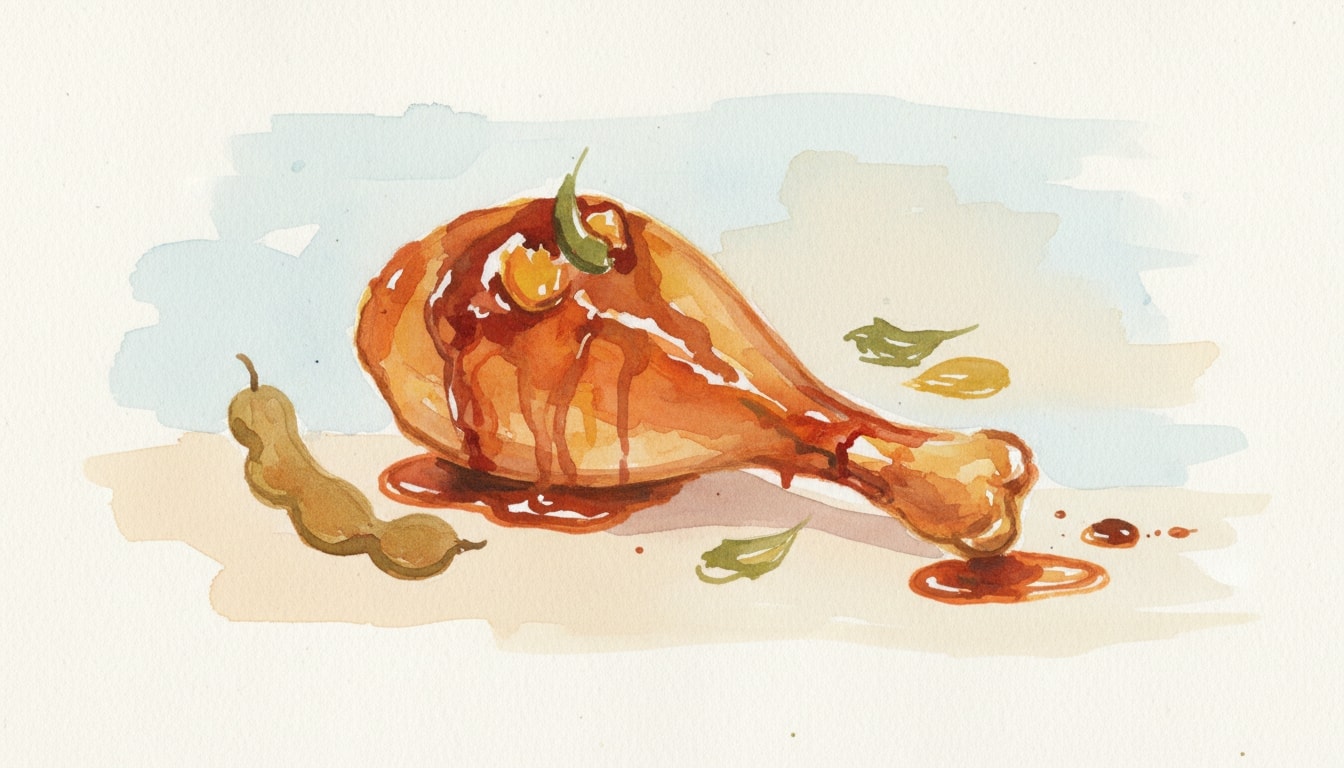
Add the water, dried apricots, apricot jam, tamarind concentrate, sugar, and chipotle sauce to the skillet. Include the optional chipotle peppers if more heat is desired.
Increase heat to medium-high to reach a simmer, then adjust heat to maintain a steady simmer for 30 minutes until the sauce thickens and the chicken reaches an internal temperature of 74°C (165°F).
Taste the sauce and add more salt or pepper if needed. Serve the chicken hot with the sauce.
Chef's Notes
- For a deeper flavor, consider searing the chicken in batches to avoid overcrowding the pan, which can lead to steaming rather than browning.
- Taste and adjust the sauce before serving. The sweetness of the apricots and sugar, the tang of the tamarind, and the heat of the chipotle can all be balanced to your preference.
- If the sauce is too thick after simmering, you can loosen it with a splash of water or chicken broth. If it's too thin, continue to simmer uncovered, or thicken with a cornstarch slurry (1 tbsp cornstarch mixed with 2 tbsp cold water).
- Ensure your dried apricots are plump and moist; if they are very dry, they may benefit from a brief soak in warm water before adding to the sauce.
Storage
Refrigerator: 4 days — Store in an airtight container.
Freezer: 3 months — Thaw overnight in the refrigerator before reheating.
Reheating: Heat in a skillet over medium heat until the internal temperature reaches 74°C/165°F.
Troubleshooting
The sauce is too thin after the simmering time.
Cause: The heat was too low or the pan was covered, preventing evaporation.
Fix: Remove the chicken to a plate and boil the sauce on high heat for 5-7 minutes until reduced.
Prevention: Ensure the liquid is at a steady simmer and leave the skillet uncovered.
The chicken is dry or tough.
Cause: The chicken was simmered for too long or at too high a temperature.
Fix: Cannot be fixed, but extra sauce can help mask the dryness.
Prevention: Use an instant-read thermometer to pull the chicken exactly at 74°C (165°F).
Cultural Context
This dish is a modern fusion creation, blending the sweet and tangy notes of apricots, often found in Middle Eastern and Mediterranean cuisines, with the smoky heat of chipotle peppers, a staple in Mexican cooking. The use of tamarind adds a complex sourness that bridges these flavors, creating a unique savory-sweet profile that is characteristic of contemporary global fusion.


