
Equipment
Ingredients
Aromatics & Spices
- 15 ml coconut oil
- 1 yellow onion, diced
- 3 garlic, minced
- 10 g fresh ginger, grated
- 15 g caribbean curry powder
- 3 g fresh thyme, leaves only, chopped
Vegetables & Broth
- 400 g sweet potato, peeled and diced into 1.5cm cubes
- 400 ml full-fat coconut milk, stirred well
- 120 ml vegetable broth
Proteins & Greens
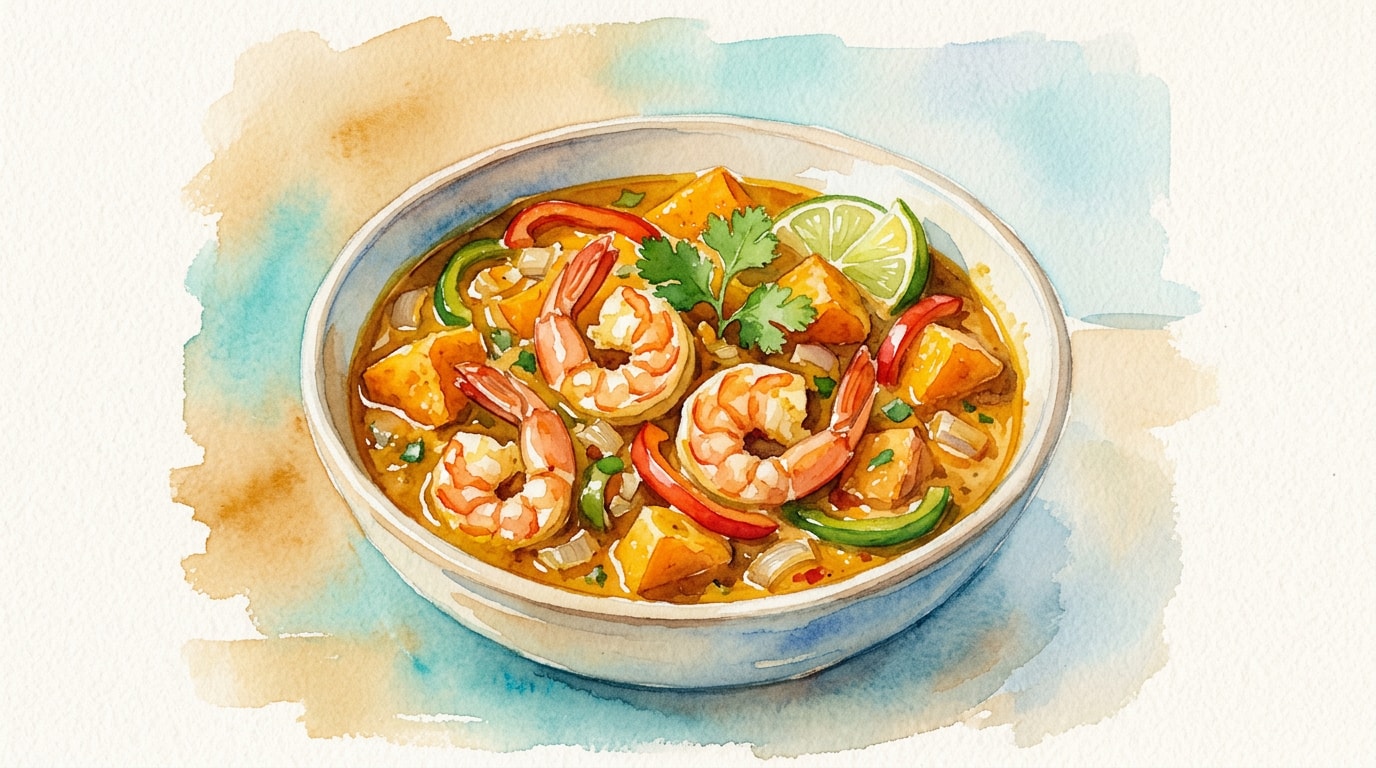
- 450 g large shrimp, raw, peeled, deveined, tails removed
- 100 g kale, tough stems removed, roughly chopped
Finishing
- 15 ml lime juice, freshly squeezed
- 5 g kosher salt
Nutrition (per serving)
Nutrition is estimated per serving. Nutrients without complete source data are omitted.
Full nutrition
- Calories
- 441 kcal
- Protein
- 21 g
- Carbohydrates
- 33 g
- Fat
- 27 g
- Fiber
- 7 g
- Sugar
- 6 g
- Sodium
- 1298 mg
- Saturated Fat
- 22 g
- Trans Fat
- 0 g
- Monounsaturated Fat
- 2 g
- Polyunsaturated Fat
- 1 g
- Cholesterol
- 142 mg
- Potassium
- 904 mg
- Calcium
- 210 mg
- Iron
- 5.6 mg
- Magnesium
- 121 mg
- Phosphorus
- 462 mg
- Zinc
- 2.4 mg
- Vitamin A
- 836 mcg
- Vitamin C
- 33 mg
- Vitamin D
- 0.1 mcg
- Vitamin E
- 2.9 mg
- Vitamin K
- 104 mcg
- Vitamin B6
- 0.6 mg
- Vitamin B12
- 1.3 mcg
- Thiamin
- 0.19 mg
- Riboflavin
- 0.19 mg
- Niacin
- 3.8 mg
- Folate
- 72 mcg
- Water
- 336 g
Sources: USDA FoodData Central
Method
Heat the coconut oil in a large deep skillet over medium heat. Add the diced yellow onion, minced garlic, and grated ginger. Cook, stirring frequently with a wooden spoon, until the onions are soft and translucent.
Sprinkle the Caribbean curry powder and fresh thyme over the aromatics. Cook for one minute, stirring constantly, until the spices are deeply fragrant.
Add the diced sweet potatoes, full-fat coconut milk, and vegetable broth to the skillet. Stir to combine, scraping up any browned bits from the bottom. Bring the liquid to a gentle bubble, then reduce the heat to medium-low, cover, and simmer until the sweet potatoes are tender.
Stir the raw shrimp and chopped kale into the simmering broth. Cook gently until the shrimp curl into a C-shape, turn entirely opaque, and reach an internal temperature of 63°C/145°F. The kale should wilt simultaneously.
Remove the skillet from the heat. Stir in the fresh lime juice and kosher salt. Taste the broth and adjust the seasoning if necessary before serving immediately.
Chef's Notes
- Always ensure you use dedicated cutting boards for raw seafood and fresh vegetables to prevent cross-contamination in your kitchen.
- Caribbean curry powders differ from standard Indian blends by typically featuring a heavier emphasis on turmeric, coriander, and allspice, while often omitting cumin. If you cannot find a Caribbean blend, use Madras curry powder and add a pinch of ground allspice.
- The acid from the fresh lime juice added at the very end is crucial. It cuts through the rich coconut milk and sweet potato, balancing the entire flavor profile of the dish.
Storage
Refrigerator: 2 days — Store in an airtight container. Shrimp can become rubbery upon reheating, so warm very gently.
Freezer: 1 month — The texture of the sweet potato may become slightly mushy after freezing and thawing.
Reheating: Warm gently on the stovetop over low heat until just heated through to prevent overcooking the shrimp.
Troubleshooting
Shrimp is tough and rubbery
Cause: The shrimp was boiled too vigorously or left on the heat for too long
Fix: Cannot be fixed
Prevention: Ensure the sweet potatoes are completely cooked before adding the shrimp, keep the heat at a gentle simmer, and remove from heat immediately once the shrimp turn opaque
Curry broth is too thin or watery
Cause: Using lite coconut milk instead of full-fat, or the sweet potatoes did not release enough starch
Fix: Remove the cooked shrimp to prevent overcooking, then increase the heat to a rapid simmer to reduce the liquid, or mash a few pieces of sweet potato into the broth to thicken it
Prevention: Always use full-fat canned coconut milk for rich curries
Cultural Context
Curry dishes are a beloved cornerstone of Caribbean cuisine, originally introduced to the islands by East Indian indentured servants in the 19th century. Today, dishes like this beautifully illustrate the fusion of those traditional Indian spice techniques with local Caribbean staples like sweet potato, coconut, and fresh regional seafood.


