
Equipment
Ingredients
Pasta
- 400 g spaghetti
Produce
- 3 sweet corn, kernels removed from cob
- 300 g asparagus, tough ends trimmed, cut into 3cm bias slices
- 4 scallion, thinly sliced, white and green parts separated
- 4 garlic, finely minced
- 1 lemon, zested and juiced
Dairy
- 60 g unsalted butter, divided into two portions
- 250 g fresh whole milk ricotta
Pantry & Seasonings
- 60 ml dry vermouth
- 4 g white sugar
- 2 g ground turmeric
- 10 g kosher salt
- 3 g black pepper, freshly ground
Nutrition (per serving)
Nutrition is estimated per serving. Nutrients without complete source data are omitted.
Full nutrition
- Calories
- 705 kcal
- Protein
- 24 g
- Carbohydrates
- 108 g
- Fat
- 22 g
- Fiber
- 8 g
- Sugar
- 13 g
- Sodium
- 1160 mg
- Saturated Fat
- 12 g
- Trans Fat
- 0 g
- Monounsaturated Fat
- 6 g
- Polyunsaturated Fat
- 2 g
- Cholesterol
- 63 mg
- Potassium
- 896 mg
- Calcium
- 201 mg
- Iron
- 6.3 mg
- Magnesium
- 122 mg
- Phosphorus
- 437 mg
- Zinc
- 2.8 mg
- Vitamin A
- 221 mcg
- Vitamin C
- 26 mg
- Vitamin D
- 0.1 mcg
- Vitamin E
- 1.6 mg
- Vitamin K
- 55 mcg
- Vitamin B6
- 0.5 mg
- Vitamin B12
- 0.6 mcg
- Thiamin
- 1.18 mg
- Riboflavin
- 0.78 mg
- Niacin
- 9.9 mg
- Folate
- 330 mcg
- Water
- 249 g
- Alcohol
- 1 g
Sources: USDA FoodData Central
Method
Bring a large pot of heavily salted water to a rolling boil at 100°C/212°F. Cook the spaghetti until one minute shy of al dente according to package directions. Reserve 200ml of the starchy pasta water before draining the noodles.
While the pasta cooks, melt 30g of butter in a large wide skillet over medium-high heat. Add the corn kernels and sugar in an even layer. Let cook completely undisturbed for 3 minutes to develop a deep caramelized crust, then toss.
Lower the heat to medium. Add the asparagus pieces and scallion whites to the skillet. Toss frequently until the asparagus is bright green and just tender, about 3 to 4 minutes.
Make a clearing in the center of the skillet. Drop in the remaining 30g of butter, minced garlic, and ground turmeric. Let toast in the center for 45 to 60 seconds until highly fragrant, then stir to incorporate with the vegetables.
Pour the dry vermouth into the skillet to deglaze, scraping the bottom to release any browned bits. Simmer rapidly until the liquid is almost completely evaporated.
Add the drained, slightly undercooked spaghetti and 100ml of the reserved pasta water to the skillet. Toss vigorously with tongs over medium heat until the starchy water and butter emulsify into a thick, glossy sauce that coats the noodles. Stir in the lemon juice, lemon zest, kosher salt, black pepper, and scallion greens.
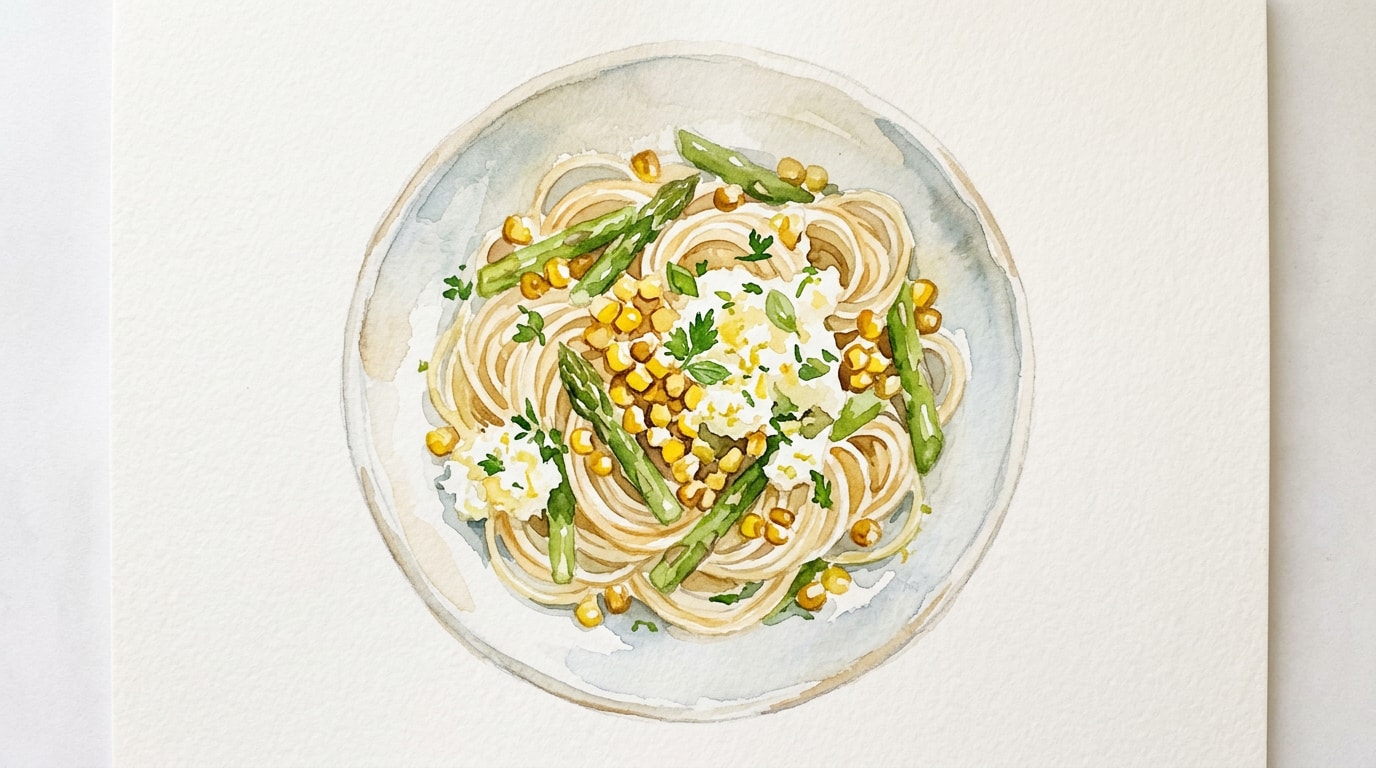
Divide the pasta immediately among warmed bowls. Dollop generous spoonfuls of fresh ricotta directly over the hot pasta, allowing it to gently warm. Garnish with additional black pepper.
Chef's Notes
- The tiny amount of added sugar is a restaurant technique used to accelerate the Maillard reaction on sweet corn, ensuring a deep roasted flavor quickly before the kernels lose their crisp pop.
- Turmeric acts as both a subtle earthy background note and a powerful visual enhancer, beautifully bridging the golden hue of the roasted corn with the bright green asparagus.
- Always seek out fresh, high-quality whole milk ricotta for finishing dishes. Its higher fat content resists breaking and provides a much silkier, richer contrast to the acidic lemon and vermouth pan sauce.
- Dry vermouth provides a complex botanical acidity that standard white wine lacks, pairing exceptionally well with the sweetness of late-summer corn and the grassy, vegetal notes of asparagus.
Storage
Refrigerator: 3 days — Ricotta may weep into the sauce; stir well before reheating gently.
Reheating: Gently warm on the stove over medium-low heat with a splash of water to revive the sauce. Add fresh ricotta only after heating.
Troubleshooting
Sauce is watery and pools at the bottom of the bowl
Cause: Pasta water and fat did not emulsify properly, or pasta was not tossed vigorously enough.
Fix: Return the skillet to medium heat, add a splash of reserved pasta water, and toss rapidly until the sauce binds.
Prevention: Ensure you are using heavily starchy pasta water and toss the pasta rapidly over medium heat to encourage emulsification.
Corn steams and turns mushy instead of caramelizing
Cause: Skillet was overcrowded or the corn was stirred too frequently before a crust could form.
Fix: Increase the heat slightly and stop stirring, though full caramelization may not be achieved without overcooking the corn.
Prevention: Use a wide skillet to maximize surface area and leave the corn completely undisturbed for the first 3 minutes.
Cultural Context
This dish represents the culinary bridge between late summer and early fall produce. It combines the lingering sweetness of summer corn with robust aromatics, drawing heavily on Italian-American pan sauce techniques. By utilizing starchy pasta water and butter to bind the disparate seasonal vegetables, it creates a cohesive, comforting weeknight meal.


