Equipment
* optional
Ingredients
Wet Ingredients
- 170 g unsalted butter, cut into cubes, cold
- 180 g light brown sugar, packed
- 50 g granulated sugar
- 1 egg, room temperature
- 1 egg yolk, room temperature
- 5 ml vanilla extract
Dry Ingredients
- 220 g all-purpose flour
- 4 g cornstarch
- 4 g baking soda
- 3 g fine sea salt
Chocolate
- 180 g semisweet chocolate, chopped into 1 cm pieces
Nutrition (per serving)
Nutrition is estimated per serving. Nutrients without complete source data are omitted.
Full nutrition
- Calories
- 326 kcal
- Protein
- 3 g
- Carbohydrates
- 43 g
- Fat
- 17 g
- Fiber
- 1 g
- Sugar
- 27 g
- Sodium
- 204 mg
- Saturated Fat
- 10 g
- Potassium
- 106 mg
- Calcium
- 28 mg
- Iron
- 1.6 mg
- Magnesium
- 24 mg
- Phosphorus
- 57 mg
- Zinc
- 0.5 mg
- Vitamin A
- 109 mcg
- Vitamin C
- 0 mg
- Water
- 9 g
Sources: Aggregated Public Data, USDA FoodData Central
Method
Chop the semisweet chocolate into roughly 1 cm pieces so a mix of shards and chunks will melt into distinct pockets. Set aside.
Melt the butter in a light-colored saucepan over medium heat, about 175°C/350°F. Swirl the pan occasionally as the butter foams, then watch closely as the milk solids turn golden and release a nutty, toffee-like aroma, about 5-7 minutes total. Immediately pour into a heatproof bowl, scraping in the browned solids.
Let the browned butter cool for 5 minutes until warm but not hot. Add both sugars and whisk vigorously for about 1 minute until the mixture looks glossy, thick, and slightly cooled.
Whisk in the whole egg, then the extra egg yolk, and finally the vanilla, mixing until smooth and emulsified, about 1 minute.
In a separate bowl, whisk together the flour, cornstarch, baking soda, and salt. Add the dry mixture to the wet and fold gently with a spatula just until no streaks of flour remain. Do not overmix.
Fold in the chopped chocolate, distributing the chunks evenly throughout the dough.
Cover the bowl and chill the dough for at least 1 hour, or up to 48 hours. Chilling solidifies the browned butter so the cookies bake thick rather than spreading thin, and gives the flour time to hydrate for a chewy, fudgy texture.
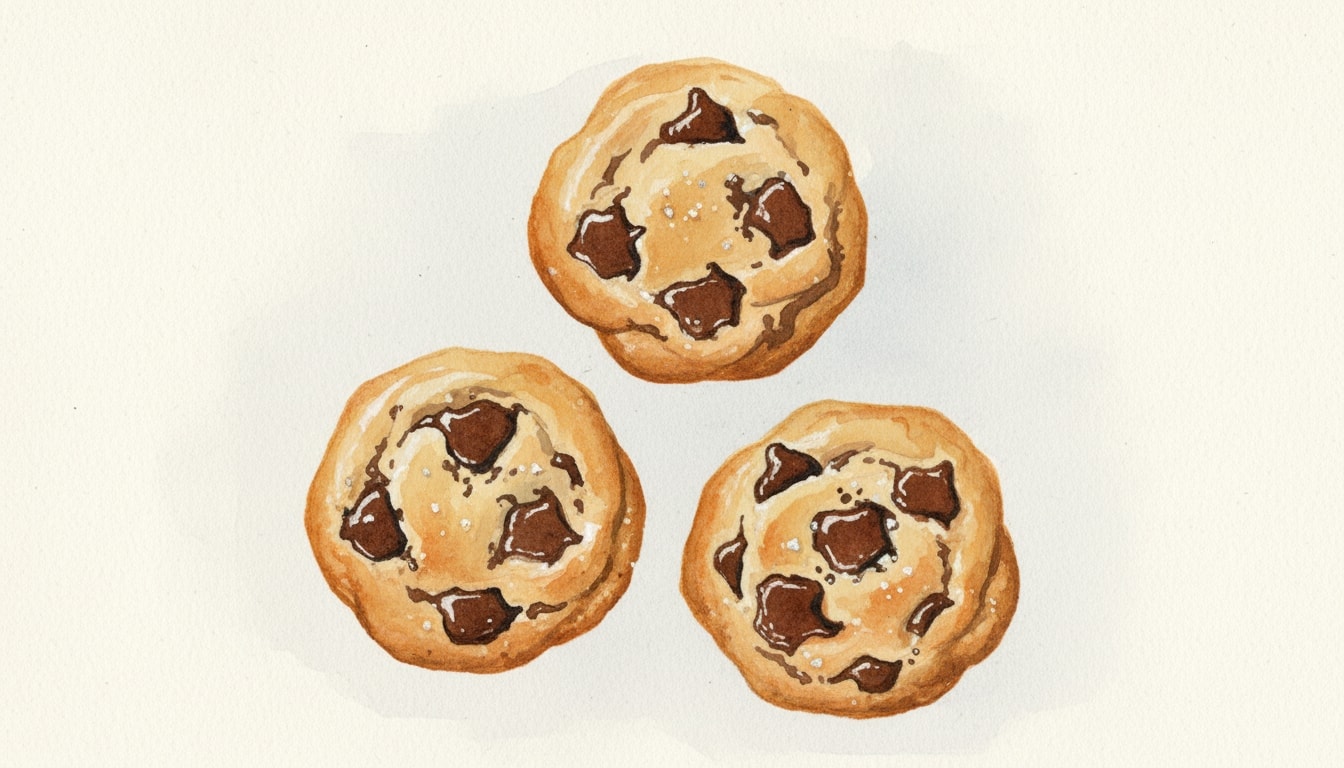
Preheat the oven to 190°C/375°F with a rack in the middle. Line a baking sheet with parchment paper. Scoop the chilled dough into 50g portions (about 2 heaping tablespoons each) and place 6 mounds on the sheet, spacing them at least 7 cm apart.
Bake for 10-12 minutes, until the edges are deeply golden brown and crackly but the centers still look slightly underdone and soft. The cookies will appear underbaked; that is correct. Rotate the pan halfway through for even browning.
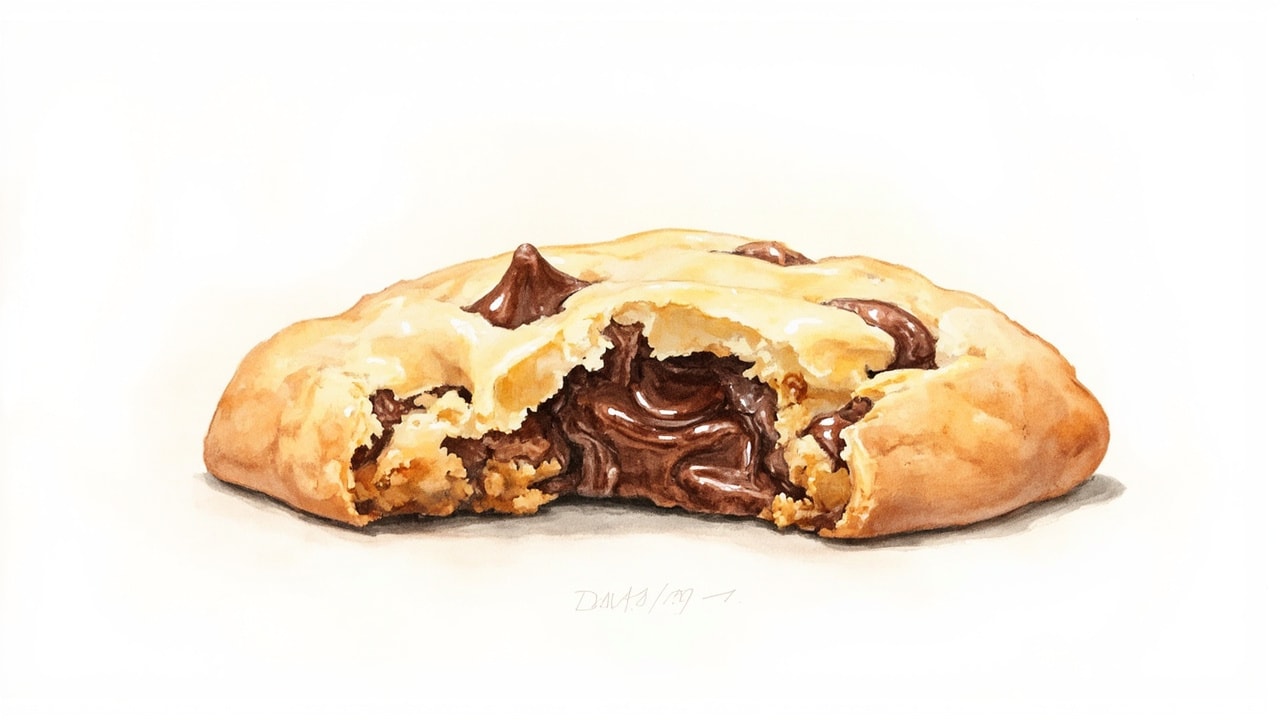
Let the cookies rest on the hot baking sheet for 5 minutes - they finish setting up here as carryover heat cooks the centers gently. Then transfer to a wire rack to cool completely, or eat warm when the chocolate is still molten.
Chef's Notes
- Browning the butter is essentially a Maillard reaction on the milk solids, generating the same family of nutty, toffee-like compounds found in caramel and toasted nuts - it is the single biggest flavor upgrade over plain melted butter.
- Adding an extra egg yolk (rather than a second whole egg) is a deliberate choice: the yolk contributes emulsified fat and richness without the extra water in an egg white, which would otherwise promote a cakier, drier crumb.
- Cornstarch at 4g is a small but important amount - it interferes with gluten formation and produces a more tender, almost melty texture in the center.
- Chilling the dough is non-negotiable for the gooey-center effect: it re-firms the browned butter so the cookies hold height in the oven, and a long rest hydrates the flour for a denser, fudgier bite.
- Underbaking the centers by 1-2 minutes is the secret. The cookies should look slightly underdone when you pull them; carryover heat on the hot sheet finishes the centers without driving off moisture.
Storage
Refrigerator: 5 days — Store in an airtight container with a slice of bread to maintain softness
Freezer: 2 months — Freeze baked cookies or shaped dough balls in a sealed bag; bake frozen dough balls with 2 extra minutes
Reheating: Warm in a 175°C/350°F oven for 3-4 minutes to refresh the crispy edges and re-melt the chocolate pockets
Troubleshooting
Cookies spread into thin, flat discs
Cause: The browned butter was too warm when mixed, or the dough was not chilled long enough
Fix: Cannot be fixed once baked - return the remaining dough to the refrigerator for another 30-60 minutes before baking the next batch
Prevention: Cool the browned butter to just-warm before whisking with the sugars, and chill the dough for the full hour so the fat resolidifies
Cookies are cakey or dry instead of gooey
Cause: Too much flour was incorporated or the dough was overmixed, developing gluten
Fix: Slightly underbake the next batch and reduce flour by 10g if the dough feels stiff
Prevention: Measure flour by weight, fold gently, and stop the moment no streaks remain
Centers are firm rather than molten or gooey
Cause: Cookies were baked too long or at too low a temperature
Fix: Reheat a baked cookie in the microwave for 8-10 seconds to briefly re-melt the chocolate and soften the center
Prevention: Pull the cookies when centers still look slightly underdone - they finish setting on the pan
Brown butter tastes bitter or burnt
Cause: The butter was cooked past the deep amber stage into blackened milk solids
Fix: Cannot be fixed - start a fresh batch; burnt brown butter cannot be rescued
Prevention: Use a light-colored pan, lower the heat to medium, and pull the butter the moment it smells nutty and turns the color of dark caramel
Cookies stick to the parchment or break when lifted
Cause: Cookies were moved before the 5-minute rest on the hot sheet was complete
Fix: Slide the parchment onto the wire rack and let cookies cool further - they will firm up
Prevention: Allow the full rest on the baking sheet so the centers finish setting up enough to lift cleanly
Cultural Context
The chocolate chip cookie is a hallmark of American home baking, where the balance of textures - crisp edge, chewy middle, melted chocolate - has become a familiar comfort. Building on that tradition with brown butter reflects a modern home-baker's instinct to layer deeper, toastier flavors into a beloved classic.