
Equipment
* optional
Ingredients
Fish
- 600 g scrod fillets, patted dry
Produce
- 300 g cherry tomatoes, washed and dried
- 3 garlic, minced
- 2 lime, juiced
- 10 g fresh cilantro, finely chopped
Pantry
- 45 ml olive oil
- 5 g salt
- 2 g black pepper, freshly ground
Nutrition (per serving)
Nutrition is estimated per serving. Nutrients without complete source data are omitted.
Full nutrition
- Calories
- 246 kcal
- Protein
- 28 g
- Carbohydrates
- 5 g
- Fat
- 12 g
- Fiber
- 2 g
- Sugar
- 3 g
- Sodium
- 572 mg
- Saturated Fat
- 2 g
- Monounsaturated Fat
- 8 g
- Polyunsaturated Fat
- 2 g
- Cholesterol
- 65 mg
- Potassium
- 840 mg
- Calcium
- 45 mg
- Iron
- 1.0 mg
- Magnesium
- 59 mg
- Phosphorus
- 332 mg
- Zinc
- 0.9 mg
- Vitamin A
- 27 mcg
- Vitamin C
- 16 mg
- Vitamin D
- 1.4 mcg
- Vitamin E
- 2.7 mg
- Vitamin K
- 16 mcg
- Vitamin B6
- 0.4 mg
- Vitamin B12
- 1.4 mcg
- Thiamin
- 0.13 mg
- Riboflavin
- 0.12 mg
- Niacin
- 3.2 mg
- Folate
- 13 mcg
- Water
- 133 g
Sources: Aggregated Public Data, USDA FoodData Central
Method
Preheat the oven to 200°C/400°F.
In a mixing bowl, whisk together 30ml of olive oil, the fresh lime juice, minced garlic, chopped cilantro, half of the salt, and half of the black pepper to create the marinade.
Coat the scrod fillets thoroughly with the marinade. Set aside at room temperature to marinate for exactly 15 minutes.
While the fish marinates, place the cherry tomatoes on a baking sheet. Toss with the remaining 15ml of olive oil, the remaining salt, and the remaining black pepper until evenly coated.
Roast the tomatoes in the preheated oven at 200°C/400°F for 10 minutes, just until their skins begin to soften and blister slightly.
Remove the baking sheet from the oven. Change the oven setting to broil on high, which is approximately 260°C/500°F.
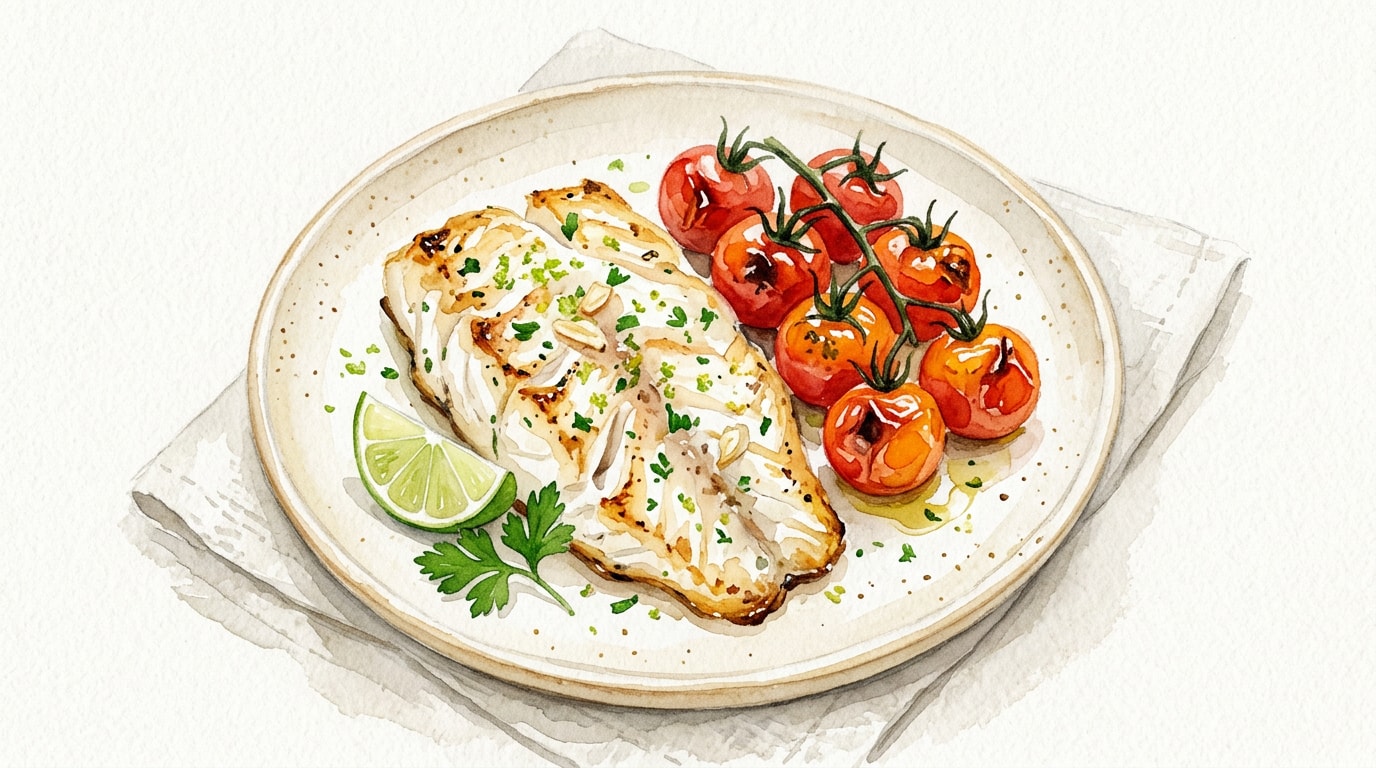
Carefully push the hot tomatoes to the outer edges of the baking sheet to make room, and lay the marinated scrod fillets in the center.
Broil the fish and tomatoes for 5 to 7 minutes. Watch carefully so the garlic does not burn. The scrod is done when it is completely opaque, flakes easily with a fork, and reaches a safe internal temperature of 63°C/145°F.
Remove the baking sheet from the oven, let the fish rest for 2 minutes to settle the juices, and serve immediately alongside the blistered tomatoes.
Chef's Notes
- Scrod is a traditional New England term that usually refers to young, high-quality cod or haddock. Ask your fishmonger for thick, uniform center-cut fillets to ensure even cooking under the intense heat of the broiler.
- Be precise with your marinating time. The citric acid in lime juice will begin to chemically cook the delicate white fish, turning the exterior chalky or mushy if left for longer than 15 to 20 minutes.
- For extra flavor, deglaze the hot baking sheet with a splash of dry white wine or a few drops of water immediately after removing the fish, scraping up any browned bits to create a vibrant, quick pan sauce.
- Oven broilers vary wildly in intensity. If your broiler runs extremely hot, keep the oven door slightly cracked to vent excess heat, allowing the fish to cook through without incinerating the delicate surface herbs.
Storage
Refrigerator: 3 days — Store the fish and tomatoes together in an airtight container to allow the flavors to meld.
Freezer: 1 month — Roasted tomatoes do not freeze well; freeze the cooked fish only if absolutely necessary.
Reheating: Reheat gently in a 150 C oven until just warmed through to prevent drying out the delicate fish.
Troubleshooting
Fish is dry, tough, or rubbery
Cause: The fish was either left too long under the intense broiler heat or marinated for too long, allowing the lime juice to cure and toughen the proteins.
Fix: Flake the overcooked fish into a gentle cream sauce or chowder base, or drizzle generously with extra olive oil to mask the dryness.
Prevention: Never marinate fish in citrus for longer than 15 to 20 minutes, and begin checking the fish for doneness at the 4-minute mark under the broiler.
Garlic and herbs burn before the fish is cooked
Cause: The baking sheet was positioned too close to the broiler element.
Fix: Gently scrape off the burnt herbs and garlic bits before serving.
Prevention: Ensure your top oven rack is at least 10 to 15 centimeters away from the heat source when broiling.
Cultural Context
Scrod holds a special place in New England maritime history, originally denoting the freshest catch of the day from local trawlers, almost exclusively small cod or haddock. Broiling is a classic coastal restaurant technique that highlights the inherently mild, sweet flavor and delicate flake of these cold-water species. Introducing fresh lime and cilantro adds a bright, contemporary flair to this cherished regional American staple.


